





Rigid Gift Box Manufacturing Process: From Design to Final Assembly
Rigid gift boxes are widely used for luxury gifts, jewelry, cosmetics, watches, electronics, and premium retail packaging. Compared with ordinary folding cartons, rigid boxes have a thicker and stronger structure. They offer better protection, a more premium appearance, and more opportunities for customized branding.
For wholesalers, retailers, and brands, understanding the rigid gift box manufacturing process helps when selecting a packaging supplier, evaluating product quality, and planning bulk orders.
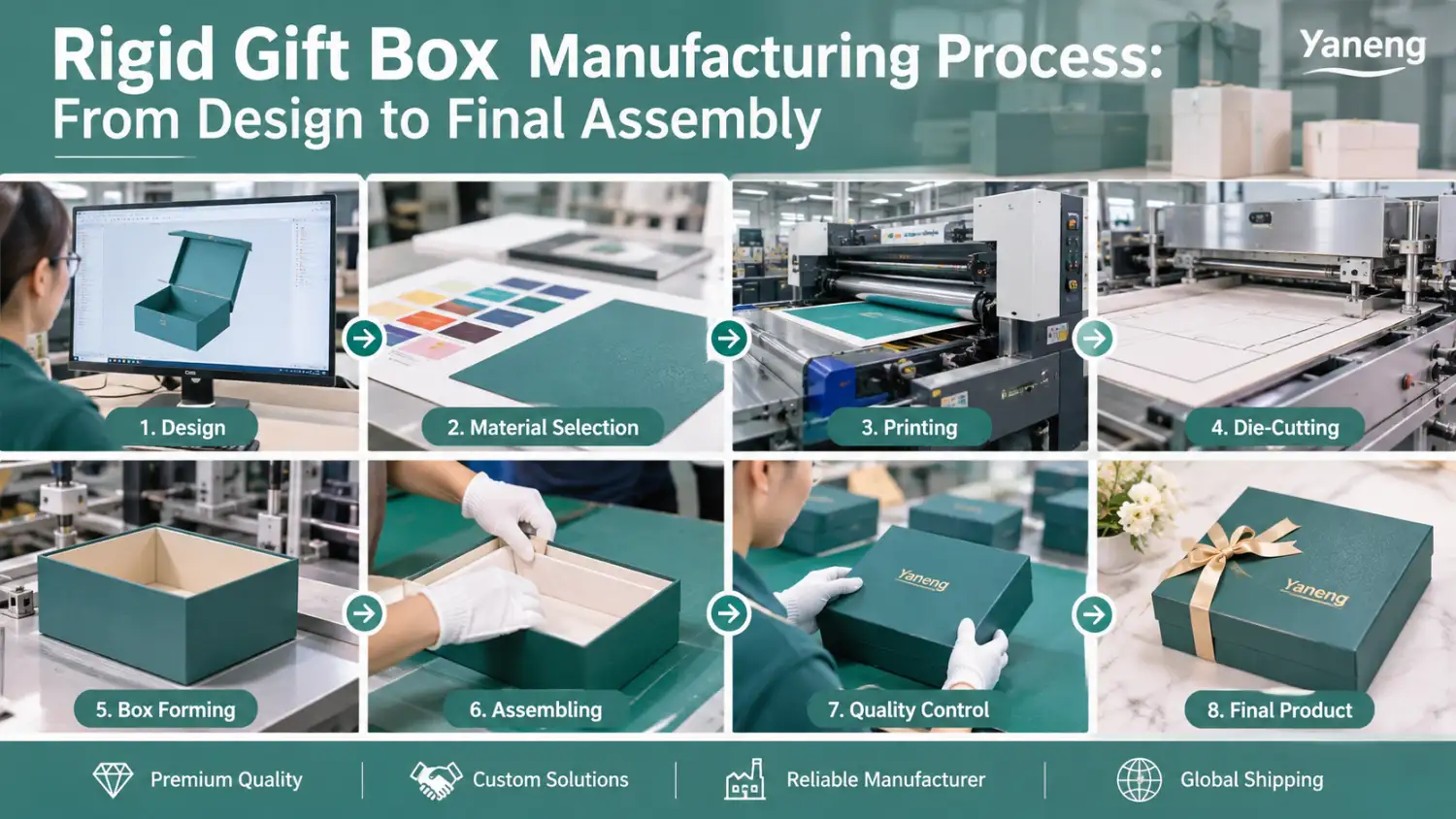
A well-made rigid gift box is not simply a cardboard box covered with decorative paper. It involves several production stages, including structural design, material preparation, board cutting, printing, paper wrapping, box forming, and final assembly. Each stage affects the appearance, strength, and consistency of the finished product.
In this guide, we explain how a rigid gift box is manufactured, from the first design concept to final quality inspection and packaging.
1. Understanding Rigid Gift Box Construction
Before looking at the production process, it is important to understand what makes a rigid gift box different from a folding carton.
A rigid gift box usually consists of two main components:
- Rigid board structure: Thick greyboard or other suitable rigid paperboard forms the main body of the box.
- Outer wrapping material: Printed paper, specialty paper, textured paper, or other decorative materials cover the rigid structure.
Some designs also include an inner lining, foam insert, paperboard divider, ribbon, magnetic closure, or other accessories.
Common rigid gift box structures include:
Lid and Base Gift Boxes
These boxes have a separate lid and base. The lid fits over the bottom section, creating a simple but elegant structure. They are commonly used for jewelry, watches, clothing accessories, and premium gifts.
Magnetic Closure Gift Boxes
Magnetic gift boxes use hidden magnets to keep the lid closed. They are popular for luxury products, promotional gift sets, cosmetics, and corporate gifts.
Drawer Gift Boxes
Drawer-style rigid boxes feature an inner tray that slides out of an outer sleeve. They offer a distinctive unboxing experience and are suitable for jewelry, small accessories, and specialty gifts.
Book-Style Gift Boxes
Book-style boxes open like a book, often with a magnetic or ribbon closure. They provide a large surface for branding and are frequently used for premium gift sets.
Shoulder and Neck Boxes
These structures include an additional inner shoulder that creates a stepped appearance between the lid and base. They are often selected for high-end packaging projects.
The structure determines the materials, production methods, assembly requirements, and final cost.
2. Step One: Product Design and Structural Development
Every rigid gift box project begins with a design.
At this stage, the manufacturer works with the buyer to understand the product, packaging purpose, target market, and desired appearance.
Confirming Product Dimensions
The first task is to determine the dimensions of the item that will be placed inside the box.
Buyers should provide:
- Product length, width, and height
- Product weight
- Required internal space
- Whether an insert or divider is needed
- Whether additional protective materials are required
The internal dimensions must provide enough room for the product and its insert without allowing excessive movement.
The external dimensions are then determined by the box structure and board thickness.
Choosing the Box Structure
The manufacturer recommends a suitable structure based on the product and budget.
For example:
- A lid and base box is suitable for simple, classic packaging.
- A magnetic box is ideal for premium gift presentation.
- A drawer box works well for small products and gift sets.
- A book-style box is suitable for products that need a more distinctive opening experience.
The structure should balance appearance, functionality, protection, and production efficiency.
Creating Technical Drawings and Prototypes
After confirming the structure, the design team prepares a technical drawing or structural layout.
This drawing helps define:
- Box dimensions
- Lid and base construction
- Folding and wrapping areas
- Magnet positions
- Insert dimensions
- Printing and logo positions
For complex designs, a physical prototype or sample is recommended before mass production.
This stage is important because structural problems are easier and less expensive to correct before bulk manufacturing begins.
3. Step Two: Selecting Materials
Material selection directly affects the strength, appearance, weight, and cost of a rigid gift box.
A professional rigid gift box manufacturer helps buyers choose materials according to their product positioning and budget.
Greyboard and Rigid Paperboard
Greyboard is commonly used as the structural material for rigid boxes.
Its thickness and density influence the final box strength. Thicker board can provide a more solid feel, but it may also increase material consumption and production cost.
The appropriate board should be selected according to the box dimensions, structure, and intended use.
Outer Wrapping Paper
The outer paper is responsible for much of the box’s visual appeal.
Common choices include:
- Coated paper
- Art paper
- Specialty paper
- Textured paper
- Kraft paper
- Colored paper
- Decorative paper with patterns
Different paper types create different visual and tactile effects.
For example, textured paper can give a premium appearance, while kraft paper is often selected for a natural packaging style.
Inner Lining Materials
The inside of a rigid gift box can be finished with paper, fabric, velvet, or other suitable materials.
For products that require extra protection or a specific presentation, the manufacturer can also design foam inserts, EVA inserts, paperboard trays, or custom compartments.
Additional Accessories
Depending on the design, rigid gift boxes may include:
- Magnets
- Ribbons
- Handles
- Foam inserts
- Paper dividers
- Metal logo plates
- Decorative labels
All materials should be confirmed before mass production to maintain consistency between the approved sample and the final order.
4. Step Three: Printing and Logo Production
Printing gives the gift box its visual identity. It is also an important stage for maintaining brand consistency.
Before printing begins, the manufacturer checks the artwork, dimensions, colors, and logo placement.
Artwork Preparation
Buyers usually provide logo files, printing artwork, brand colors, and any required text.
Vector files are preferred for many logo applications because they can be resized without losing sharpness.
The production team checks whether the artwork fits the selected box structure and whether important elements are positioned correctly.
Common Printing Methods
Different printing methods are available depending on the paper material and design.
Offset Printing
Offset printing is widely used for high-volume packaging orders. It can produce detailed graphics and consistent colors when properly controlled.
Digital Printing
Digital printing is useful for samples, short runs, and projects that require more flexible artwork changes.
Screen Printing
Screen printing can be used for certain logo and graphic applications, depending on the surface and ink requirements.
Special Logo Finishing
For premium rigid gift boxes, buyers may choose additional finishing techniques.
- Hot foil stamping: Creates metallic gold, silver, or other foil effects.
- Embossing: Raises selected parts of the design above the paper surface.
- Debossing: Presses the design into the material.
- UV coating: Adds a glossy effect to selected areas or the entire surface.
- Matte lamination: Creates a smooth, understated finish.
- Gloss lamination: Adds shine and helps protect the printed surface.
The selected finish should match the brand’s visual identity and the packaging budget.
5. Step Four: Cutting and Preparing the Rigid Board
Once the materials and design are confirmed, the rigid board is prepared for box production.
The board is cut into pieces according to the technical drawing.
Accurate cutting is essential because incorrect dimensions can affect the fit of the lid, the alignment of the corners, and the overall appearance.
For many rigid box structures, the production team also prepares the board edges and connection areas before forming the box.
At this stage, workers or production equipment check:
- Board dimensions
- Cutting accuracy
- Board thickness
- Surface condition
- Edge quality
Any damaged or incorrectly cut pieces should be removed before moving to the next stage.
6. Step Five: Forming the Rigid Box Structure
After cutting, the rigid board pieces are assembled into the required shape.
This is one of the most important stages in rigid gift box manufacturing because it determines the box’s basic structure.
The process varies according to the design.
Forming the Box Body
For a standard lid and base box, the cut board pieces are positioned and connected to create the sides and bottom.
The corners must be aligned carefully to ensure that the box is square and stable.
Forming Magnetic Gift Boxes
Magnetic gift boxes require additional structural work.
The manufacturer needs to prepare the opening panel, folding sections, and magnet positions. The magnets must be installed in the correct locations so the lid closes properly.
Forming Drawer Gift Boxes
Drawer boxes generally require two separate components:
- The outer sleeve
- The inner sliding tray
The dimensions of these components must be coordinated. If the fit is too tight, the drawer may be difficult to open. If it is too loose, the tray may slide out too easily.
Checking the Basic Structure
Before wrapping, the manufacturer checks whether the rigid box has the correct shape and dimensions.
A stable structure makes the following wrapping and finishing stages easier and helps improve the consistency of bulk production.
7. Step Six: Wrapping the Box with Decorative Paper
Wrapping is a key process that gives a rigid gift box its finished appearance.
The prepared rigid structure is covered with the selected outer paper using adhesive and suitable wrapping techniques.
The paper must be positioned accurately and folded around the edges to cover the board.
Adhesive Application
The adhesive must be suitable for the selected paper and board materials.
Too much adhesive may cause wrinkles, bubbles, or visible marks. Too little adhesive may result in loose edges or paper separation.
The production team needs to control adhesive application and allow sufficient bonding time.
Paper Positioning and Wrapping
The wrapping paper is aligned with the box structure before being fixed in place.
Workers or wrapping equipment then fold the paper around the sides, corners, and edges.
Important quality points include:
- Smooth paper surfaces
- Accurate alignment
- Clean corners
- No visible wrinkles
- No bubbles or lifting edges
- Consistent paper coverage
For premium packaging, corner finishing is especially important because poorly finished corners can make the entire box look less professional.
Wrapping the Lid and Base
For a lid and base gift box, the lid and bottom are usually wrapped as separate components.
Both parts should have consistent paper color, texture, and finishing quality.
The lid should also fit properly over the base after wrapping is complete.
8. Step Seven: Inner Lining and Insert Installation
The inside of a rigid gift box is just as important as its exterior.
A well-designed interior protects the product and creates a better presentation when the customer opens the box.
Installing Inner Lining
The interior may be covered with printed paper, colored paper, fabric, velvet, or other materials.
The lining should fit the internal structure without obvious wrinkles, gaps, or exposed board edges.
Making Custom Inserts
Different products require different insert designs.
Examples include:
- Foam inserts for fragile products
- EVA inserts for customized product positioning
- Paperboard inserts for gift sets
- Velvet inserts for jewelry
- Compartments for multiple products
The insert should hold the product securely while allowing customers to remove it easily.
For jewelry gift boxes, the interior may include ring slots, necklace hooks, earring holders, or bracelet compartments.
Testing Product Fit
Before bulk production, the manufacturer should check the actual product inside the box.
This helps confirm that:
- The product fits correctly.
- The insert provides suitable support.
- The lid closes without pressure on the product.
- The product can be removed conveniently.
Buyers should provide actual product samples or accurate dimensions whenever possible.
9. Step Eight: Installing Accessories and Completing Assembly
After the outer wrapping and interior components are finished, the box moves to final assembly.
The exact assembly process depends on the structure and accessories.
Typical tasks include:
- Installing magnets
- Attaching ribbons or handles
- Fitting inner trays
- Adding decorative labels
- Installing metal logo plates
- Connecting separate box components
- Checking lid and drawer movement
For magnetic gift boxes, the manufacturer checks whether the magnets attract correctly and whether the lid closes evenly.
For drawer boxes, the inner tray should slide smoothly without excessive friction.
For boxes with ribbons or handles, the attachments should be secure and positioned consistently.
Final assembly brings all individual components together into a complete packaging product.
10. Step Nine: Quality Inspection
Quality inspection is necessary to ensure that the finished rigid gift boxes meet the approved specifications.
A professional supplier should establish inspection procedures throughout production rather than checking only the finished products.
Appearance Inspection
Inspectors check the overall appearance of the box, including:
- Paper color and printing quality
- Logo position
- Surface cleanliness
- Wrinkles and bubbles
- Scratches and stains
- Corner finishing
- Adhesive marks
Structural Inspection
The box should maintain its intended shape and provide sufficient strength for its purpose.
Inspectors may check:
- Overall dimensions
- Lid and base fit
- Corner alignment
- Box stability
- Drawer movement
- Magnetic closure
- Insert positioning
Functional Testing
Boxes with special features need additional testing.
For example, magnetic boxes should open and close properly, while drawer boxes should slide smoothly.
If the box contains accessories or multiple compartments, the assembly and fit should also be checked.
Sample Comparison
The finished bulk products should be compared with the approved sample and confirmed specifications.
This helps identify differences in material, color, dimensions, logo placement, and finishing.
For large wholesale orders, buyers should discuss the inspection standard and acceptable quality requirements with the manufacturer before production begins.
11. Step Ten: Packing and Preparing for Shipment
After inspection, qualified rigid gift boxes are packed for delivery.
Rigid gift boxes need suitable packing because their structure and decorative surfaces can be damaged during transportation.
Depending on the product design and shipping requirements, packaging may include:
- Individual protective bags
- Tissue paper or surface protection
- Protective foam or separators
- Inner cartons
- Master export cartons
The packing method should help prevent scratches, compression, dust, and movement during transportation.
For international wholesale orders, the manufacturer should also confirm carton dimensions, packing quantities, gross weight, and shipping marks.
Buyers should communicate their destination country, preferred shipping method, and any special packaging requirements before the order is completed.
12. How Long Does Rigid Gift Box Manufacturing Take?
Production time depends on the box structure, order quantity, materials, printing requirements, and factory schedule.
A typical project includes several stages:
Design and structural confirmation
The buyer and manufacturer confirm dimensions, materials, artwork, and box structure.
Sample production
A physical sample is made so the buyer can review the appearance, dimensions, and functionality.
Sample approval
The buyer confirms the sample or requests adjustments before mass production.
Mass production
The factory completes board cutting, printing, wrapping, assembly, and inspection.
Packing and shipment
Finished products are packed and prepared for delivery.
For many custom packaging projects, sample production may take around 5–7 days, while mass production may take approximately 15 days after approval. These are planning estimates, not guaranteed lead times. Complex structures, special materials, large quantities, and production schedules can affect the actual timeline.
Buyers should confirm the production schedule with the supplier before placing an order.
13. What Affects the Cost of Rigid Gift Box Manufacturing?
The price of a rigid gift box is determined by several factors.
Box Size and Structure
Larger boxes generally require more board and wrapping material.
Complex structures, such as magnetic boxes, drawer boxes, and multi-layer gift boxes, may require more production steps and assembly work.
Material Selection
Different board thicknesses, wrapping papers, fabrics, and inserts have different costs.
Premium specialty paper and customized interior materials may increase the total price.
Printing and Logo Finishing
Basic printing is usually different in cost from projects requiring foil stamping, embossing, debossing, or multiple finishing processes.
Order Quantity
Larger orders can help spread certain setup and production costs across more units.
However, the actual unit price also depends on the box design, materials, and manufacturing efficiency.
Packaging and Shipping
Individual protection, export cartons, carton size, shipping weight, and destination can all affect the final landed cost.
For an accurate quotation, buyers should provide complete specifications rather than requesting a price based only on a product photo.
14. How to Choose a Reliable Rigid Gift Box Manufacturer
Choosing the right manufacturer is important for maintaining product quality and controlling wholesale purchasing costs.
Here are several points buyers should consider.
Check Manufacturing Experience
Look for a supplier with experience in rigid box production, including the structures and materials required for your project.
Ask for product examples, factory information, and relevant production experience.
Review Samples Carefully
A sample can reveal details that are difficult to judge from photographs.
Check the board strength, wrapping quality, corners, logo finish, interior lining, and overall assembly.
Understand Production Capacity
For wholesale orders, confirm whether the manufacturer can handle your required quantity and delivery schedule.
Ask about production arrangements, quality inspection, and how the factory manages repeat orders.
Confirm Customization Capabilities
A suitable supplier should be able to discuss box dimensions, materials, printing, logo techniques, inserts, and structural options.
The manufacturer should also communicate clearly about which requirements are feasible and which may need design adjustments.
Ask About Quality Control
Discuss how materials are inspected, how production defects are handled, and how finished products are checked before shipment.
Clear quality standards help reduce misunderstandings during bulk production.
Compare Complete Quotations
Do not compare suppliers based only on unit price.
Review the complete quotation, including materials, structure, printing, finishing, inserts, accessories, packaging, sample fees, and delivery terms.
A clear quotation makes it easier to compare suppliers fairly.
15. Rigid Gift Box Manufacturing at Yaneng Packaging
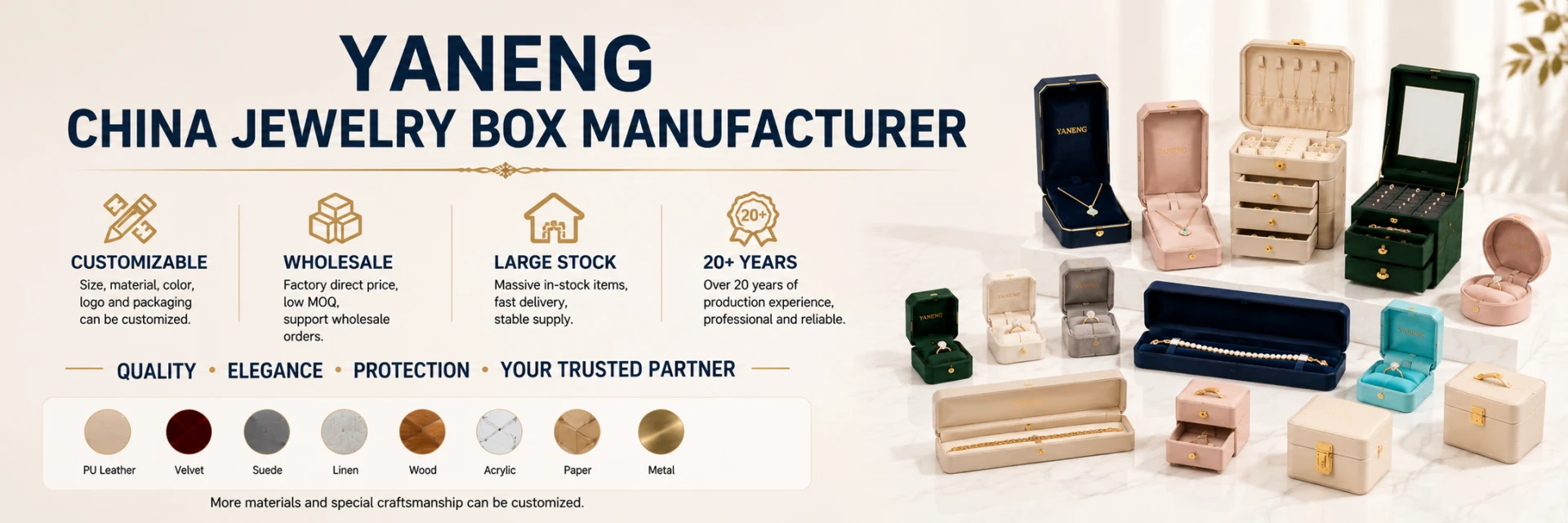
Guangzhou Yaneng Packing Co., Ltd. is a China-based packaging manufacturer established in 2005. With its factory in Panyu, Guangzhou, and a production facility in Yiwu, Yaneng provides customized packaging solutions for overseas wholesalers, brands, trading companies, and retailers.
With more than 20 years of packaging experience and approximately 5,000 square meters of factory space, Yaneng supports OEM, ODM, wholesale, and custom packaging projects.
Our packaging product range includes:
- Rigid gift boxes
- Magnetic gift boxes
- Drawer gift boxes
- Lid and base gift boxes
- Custom paper gift boxes
- Jewelry boxes and jewelry box sets
- Jewelry display trays and accessories
- Paper bags and packaging accessories
For custom rigid gift box projects, our team can assist with structural design, material selection, logo customization, sample development, and bulk production.
We understand that B2B buyers need more than an attractive sample. They also need consistent quality, practical production arrangements, clear communication, and reliable delivery planning.
Our production and quality control processes are designed to support wholesale orders and customized packaging requirements. Specific materials, structures, production capacity, and delivery schedules are confirmed according to each project.
If you are looking for a rigid gift box manufacturer in China, Yaneng can help you develop packaging that matches your product requirements and brand identity.
Conclusion
Rigid gift box manufacturing involves a series of connected processes, from structural design and material selection to printing, board cutting, wrapping, insert installation, final assembly, and quality inspection.
Every stage affects the finished product. Accurate structural design creates a stable box, suitable materials improve appearance and protection, careful wrapping creates a clean finish, and proper inspection helps maintain consistency in bulk orders.
For wholesalers, importers, and brands, understanding this process makes it easier to evaluate suppliers, prepare specifications, and avoid production problems.
If you are planning a custom rigid gift box project, choosing an experienced manufacturer and approving a physical sample before mass production are important steps.
Contact Yaneng Packaging to discuss your wholesale rigid gift box requirements. Send us your box dimensions, reference photos, preferred materials, logo artwork, and estimated order quantity. Our team can help you evaluate the design and provide a customized quotation.