


Inside Our Jewelry Box Quality Control Process: How We Ensure Consistent Quality
When purchasing jewelry boxes in bulk, product quality is just as important as price, design, and delivery time. A small defect in a single box may seem minor, but when it appears across hundreds or thousands of products, it can affect your brand image, customer experience, and business costs.
For jewelry brands, wholesalers, and distributors, consistent packaging quality is essential. Every jewelry box should have the correct dimensions, color, material, structure, logo, and finishing details.
But how can a jewelry box manufacturer maintain consistent quality during mass production?
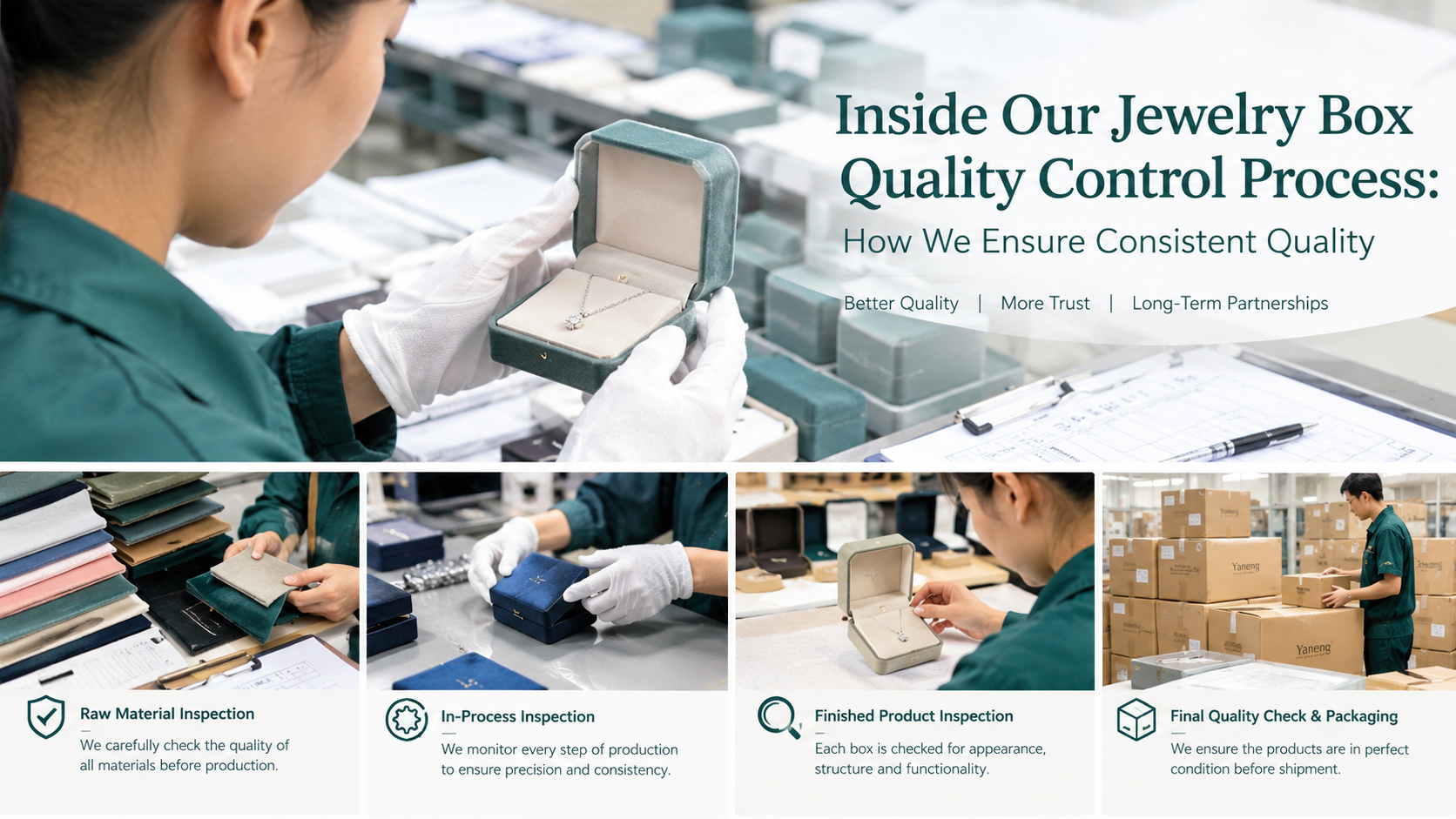
At Yaneng, quality control is an important part of our jewelry packaging manufacturing process. From raw material inspection to final product checks, each production stage requires attention to detail.
In this article, we will introduce the key steps in our jewelry box quality control process and explain what wholesale buyers should look for when choosing a reliable jewelry box factory.
1. Why Quality Control Matters in Jewelry Box Manufacturing
Jewelry packaging does more than protect jewelry. It also represents the brand and creates the first impression when customers receive their products.
Poor-quality packaging can lead to several problems:
- Boxes with incorrect dimensions may not fit the jewelry properly.
- Uneven surfaces or loose materials can make packaging look cheap.
- Incorrect logo printing can damage brand presentation.
- Weak structures may become damaged during transportation.
- Inconsistent colors can make products from different batches look different.
- Poorly fitted inserts may fail to hold jewelry securely.
For wholesale buyers, these problems can result in customer complaints, replacement costs, delayed shipments, and unnecessary inventory losses.
A professional jewelry box manufacturer should therefore establish quality standards before production begins and maintain inspection procedures throughout the manufacturing process.
2. Step One: Raw Material Quality Inspection
The quality of a finished jewelry box starts with its materials.
Different jewelry boxes use different materials, including paperboard, velvet, PU leather, microfiber, wood, plastic, foam, and metal accessories.
Before production, materials should be checked against the approved specifications.
Checking Material Appearance
The factory should inspect materials for visible problems such as:
- Scratches or stains
- Uneven colors
- Surface damage
- Wrinkles or defects
- Incorrect material textures
- Damaged edges
For example, velvet jewelry boxes require consistent fabric appearance and color. PU leather boxes should have an even surface without obvious scratches or unwanted marks.
Checking Material Specifications
Material appearance is not the only consideration. Thickness, size, texture, and other agreed specifications should also be checked.
For paper jewelry boxes, paperboard thickness can influence box strength and structure. For jewelry inserts, the material and firmness should be suitable for the jewelry being stored.
Checking Accessories and Components
Small components can also affect the finished product.
Depending on the design, the factory may need to inspect hinges, magnets, buttons, metal decorations, LED components, ribbons, and other accessories.
Checking these materials before production helps reduce problems during assembly.
3. Step Two: Sample Approval Before Mass Production
Sample approval is one of the most important stages in custom jewelry box manufacturing.
Before starting a large order, the manufacturer should prepare a sample based on the buyer’s requirements.
The sample gives both parties an opportunity to confirm the product details before mass production.
What Should Buyers Check in a Jewelry Box Sample?
1. Dimensions and Structure
Check the external dimensions, internal space, lid design, opening direction, and overall structure.
2. Material and Color
Confirm that the materials and colors match the approved specifications or reference sample.
3. Logo and Branding
Check the logo size, position, color, printing method, and overall appearance.
4. Interior Insert
Make sure the insert fits the jewelry correctly. Ring slots, necklace hooks, earring holes, and bracelet compartments should be designed for their intended use.
5. Opening and Closing Performance
Check whether the lid, drawer, hinge, magnetic closure, or zipper works properly.
6. Overall Appearance
Look for uneven wrapping, glue marks, loose fabric, visible defects, and other finishing problems.
Once the sample is approved, it should become the reference standard for mass production.
This is particularly important for wholesale orders because it gives the factory a clear quality target to follow.
4. Step Three: Quality Checks During Production
Quality inspection should not be limited to the beginning and end of manufacturing.
During mass production, the factory should monitor important processes to identify problems early.
Different jewelry box styles require different production checks.
Paper Jewelry Box Production
Paper jewelry boxes usually involve cutting, forming, wrapping, gluing, and assembly.
Important inspection points include:
- Accurate cutting dimensions
- Correct box structure
- Smooth paper wrapping
- Clean corners and edges
- Proper glue application
- Consistent lid fitting
- Correct logo placement
Poor wrapping or uneven corners can affect the appearance of the finished box.
Velvet Jewelry Box Production
Velvet jewelry boxes require careful material handling and finishing.
Important inspection points include:
- Consistent velvet color and texture
- Smooth fabric wrapping
- Clean edges and corners
- Proper insert installation
- No obvious glue marks
- Secure assembly
The fabric should be properly positioned to maintain a neat and premium appearance.
PU Leather Jewelry Box Production
For PU leather jewelry boxes, the surface and finishing details are especially important.
The factory should check:
- Surface condition
- Material consistency
- Wrapping quality
- Stitching or edge finishing, where applicable
- Lid alignment
- Logo application
- Insert fitting
LED Jewelry Box Production
LED jewelry boxes include additional components that require functional checks.
Depending on the design, inspection may include:
- LED light operation
- Switch or sensor performance
- Battery installation
- Wiring and component connections
- Light positioning
- Lid opening performance
These checks help ensure that both the packaging structure and lighting function meet the approved requirements.
5. Step Four: Finished Product Inspection
After assembly, finished jewelry boxes should undergo a final quality inspection.
At this stage, the factory checks whether the completed products meet the approved sample and order specifications.
Typical inspection points include:
Appearance Inspection
Check the overall appearance of each product for:
- Scratches and stains
- Wrinkles or uneven surfaces
- Glue marks
- Loose materials
- Damaged corners
- Incorrect colors
- Printing defects
Dimension Inspection
The finished box should match the confirmed dimensions.
This is particularly important for custom jewelry boxes because the internal space must fit the jewelry correctly.
Structure Inspection
Check whether the box opens and closes properly and whether its components are securely assembled.
For example, a drawer box should slide smoothly, while a flip-top jewelry box should open and close without obvious problems.
Logo Inspection
Branding is a key part of custom jewelry packaging.
The factory should check whether the logo is clear, correctly positioned, and consistent with the approved artwork and sample.
Insert Inspection
The insert should fit the box and hold the jewelry as intended.
Incorrect insert dimensions or poorly positioned compartments can affect both product protection and presentation.
6. Step Five: Full Inspection Before Shipment
For wholesale buyers, pre-shipment inspection is an important part of quality assurance.
A manufacturer should not simply finish production and pack everything without checking the finished products.
At Yaneng, our quality control system includes 10–12 QC processes, including three full-inspection stages. We maintain a 100% inspection commitment before shipment.
The inspection scope depends on the product type and agreed requirements, but may include:
- Product appearance
- Dimensions and structure
- Material and color consistency
- Logo quality
- Insert fitting
- Assembly and functionality
- Packaging condition
If defects are identified, the affected products should be separated for correction or replacement according to the agreed quality standards.
For large wholesale orders, inspection records and clear acceptance requirements help both the factory and buyer understand the expected quality level.
7. Step Six: Packaging and Shipment Quality Checks
Quality control does not end when the jewelry boxes are completed.
Products also need suitable packaging before international transportation.
Improper packing can cause scratches, deformation, crushed corners, or other damage during handling and shipping.
Before shipment, the factory should check:
Individual Product Protection
Jewelry boxes should be packed in a way that helps prevent surface damage and unnecessary movement.
Carton Packing
Carton sizes, quantities, and packing methods should match the shipping requirements.
Carton Labels
Shipping marks and carton information should be checked against the buyer’s requirements.
Final Quantity Confirmation
The packed quantity should match the purchase order and packing list.
These checks help reduce avoidable problems during international transportation and receiving.
8. How Yaneng Maintains Consistent Quality for Wholesale Jewelry Boxes
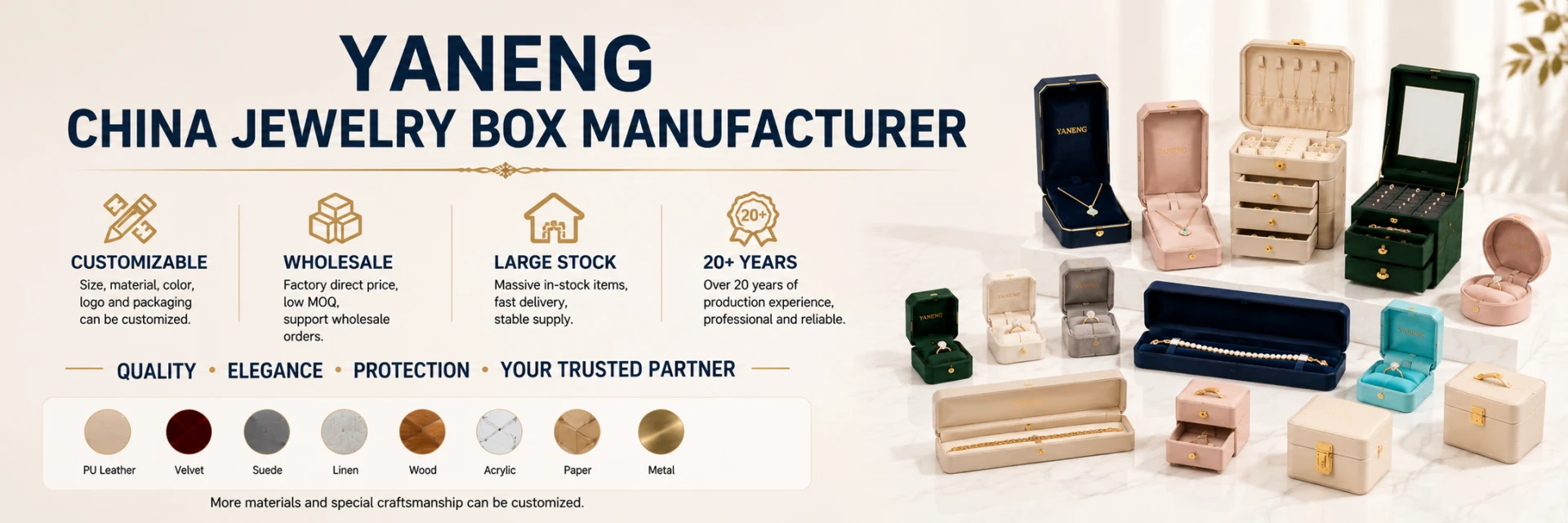
As a jewelry packaging manufacturer established in 2005, Guangzhou Yaneng Packing Co., Ltd. understands that wholesale buyers need more than attractive product designs. They also need reliable production and consistent quality.
Our quality management approach focuses on several important areas.
More Than 20 Years of Industry Experience
With more than 20 years of experience in jewelry packaging, Yaneng has developed production experience across different materials, structures, and product categories.
Our product range includes paper jewelry boxes, velvet jewelry boxes, PU leather jewelry boxes, plastic jewelry boxes, LED jewelry boxes, jewelry box sets, and display products.
Multiple Quality Inspection Procedures
We use multiple QC procedures throughout production, including three full-inspection stages.
This approach helps identify issues at different manufacturing stages instead of waiting until the entire order is finished.
Experienced Production Team
Our team includes workers and staff involved in design, production, assembly, inspection, and order coordination.
Experienced workers are particularly important for jewelry boxes that require careful wrapping, detailed finishing, and precise assembly.
Customized Sample Confirmation
For custom orders, sample approval helps establish a clear reference before mass production.
Buyers can confirm the material, color, structure, logo, and other important details before the factory begins producing the full order.
Production and Delivery Coordination
Yaneng works with wholesale buyers, jewelry brands, and trading companies on customized and bulk packaging projects.
We coordinate production requirements, quality checks, and shipment preparation to support a more organized purchasing process.
9. What Wholesale Buyers Should Confirm Before Placing an Order
Even when working with an experienced manufacturer, buyers should communicate their quality requirements clearly.
Here is a practical checklist to use before confirming a jewelry box order.
Product Specifications
- Confirm product dimensions and tolerances.
- Specify materials, colors, and surface finishes.
- Confirm the box structure and opening method.
- Provide clear requirements for inserts and compartments.
Branding Requirements
- Supply the correct logo artwork.
- Confirm logo size and position.
- Approve the printing or branding method.
- Check the logo on the physical sample.
Sample Approval
- Request a pre-production sample when appropriate.
- Confirm all important product details.
- Keep an approved sample as a reference.
- Confirm whether any changes are allowed after approval.
Quality Standards
- Agree on acceptable appearance and workmanship.
- Confirm how defects will be handled.
- Specify any special functional tests.
- Clarify the pre-shipment inspection requirements.
Packing and Delivery
- Confirm individual packaging requirements.
- Agree on carton specifications.
- Check shipping labels and packing quantities.
- Confirm the production and shipment schedule.
The more clearly these details are communicated, the easier it is for the manufacturer to meet your expectations.
10. Choose a Jewelry Box Manufacturer That Takes Quality Seriously
Choosing a jewelry box supplier is not just about comparing prices. For wholesale buyers, a reliable manufacturing partner should be able to combine product quality, production capacity, customization support, and delivery coordination.
Guangzhou Yaneng Packing Co., Ltd. provides wholesale and customized jewelry packaging solutions for jewelry brands, wholesalers, distributors, and trading companies.
Our product range includes ring boxes, necklace boxes, earring boxes, bracelet boxes, jewelry box sets, velvet jewelry boxes, PU leather jewelry boxes, paper jewelry boxes, LED jewelry boxes, and jewelry display products.
Whether you need standard wholesale jewelry boxes or custom packaging with your own logo, our team can help you review your requirements and develop a suitable solution.
Looking for a reliable jewelry box manufacturer in China?
Contact Yaneng to discuss your next wholesale or custom jewelry packaging project.
Please share your product type, dimensions, material preferences, logo artwork, estimated order quantity, and target delivery date. Our team can help you evaluate the requirements and arrange the next steps.
Website: https://jewelpackage.com/
Email: [email protected]
WhatsApp: +86 175 0205 9429
결론
Consistent jewelry box quality depends on more than a final inspection. It requires attention at every stage, from raw material selection and sample approval to production monitoring, finished product inspection, and shipment preparation.
For wholesale buyers, understanding a manufacturer’s quality control process can help reduce purchasing risks and build a more reliable packaging supply chain.
At Yaneng, we believe that good packaging should combine attractive design, reliable construction, and consistent manufacturing quality. By maintaining inspection procedures throughout production, we aim to provide jewelry packaging solutions that support our customers’ brands and long-term business needs.